

Blog Detail
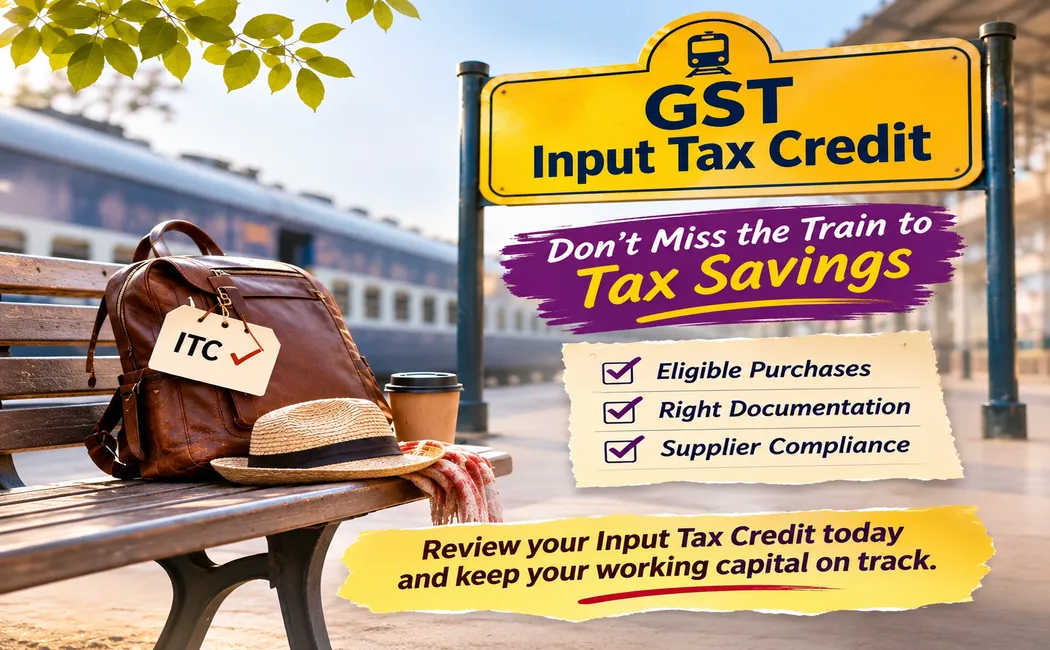
𝗚𝗦𝗧 𝗜𝗻𝗽𝘂𝘁 𝗧𝗮𝘅 𝗖𝗿𝗲𝗱𝗶𝘁: 𝗗𝗼𝗻’𝘁 𝗠𝗶𝘀𝘀 𝘁𝗵𝗲 𝗧𝗿𝗮𝗶𝗻 𝘁𝗼 𝗧𝗮𝘅 𝗦𝗮𝘃𝗶𝗻𝗴𝘀!
GST Input Tax Credit: Don’t Miss the Train to Tax Savings!
Missing an important GST compliance requirement can derail your business working capital plans.
Imagine Geet and Aditya running a ₹100 crore textile manufacturing company in Tiruppur.
Geet: “We have paid ₹50 lakh in GST on purchases. Let’s claim the entire credit!”
Aditya: “Wait! Some materials haven’t arrived, certain invoices are missing from GSTR-2B, and one machinery consignment is still pending.”
Paying GST does not automatically guarantee Input Tax Credit (ITC).
10 Essential GST Input Tax Credit Rules
1. ITC Mechanism: Eligible GST paid on purchases reduces output tax liability and prevents the cascading effect of taxation.
2. Business Purpose: Purchases must be used or intended for business activities or expansion.
3. Eligible Purchases: Raw materials, input services and capital goods can qualify for ITC.
4. Capital Goods: Business machinery and equipment capitalised in the books may qualify for credit.
5. Conditional Entitlement: ITC is a statutory benefit subject to prescribed conditions, not an automatic right.
6. GST Registration: Newly registered businesses may claim credit on eligible existing stock, subject to conditions.
7. Documentation: Maintain valid tax invoices, debit notes and prescribed supporting documents.
8. Supplier Compliance: Verify GSTR-2B, credit restrictions and supplier tax compliance, and file the prescribed GST return.
9. Receipt of Supply: Advance payments alone do not establish ITC eligibility. Bill-to-ship-to transactions may qualify without physical receipt by the buyer.
10. Multiple Consignments: Claim ITC only after receiving the final instalment of goods covered by a single invoice.
Action Point for Entrepreneurs
Review supplier compliance, purchase registers, pending deliveries and ITC reconciliations every month.
Review your GST Input Tax Credit today and keep your working capital on track.
Stay Informed. Stay Compliant.

 Call Now