

Blog Detail
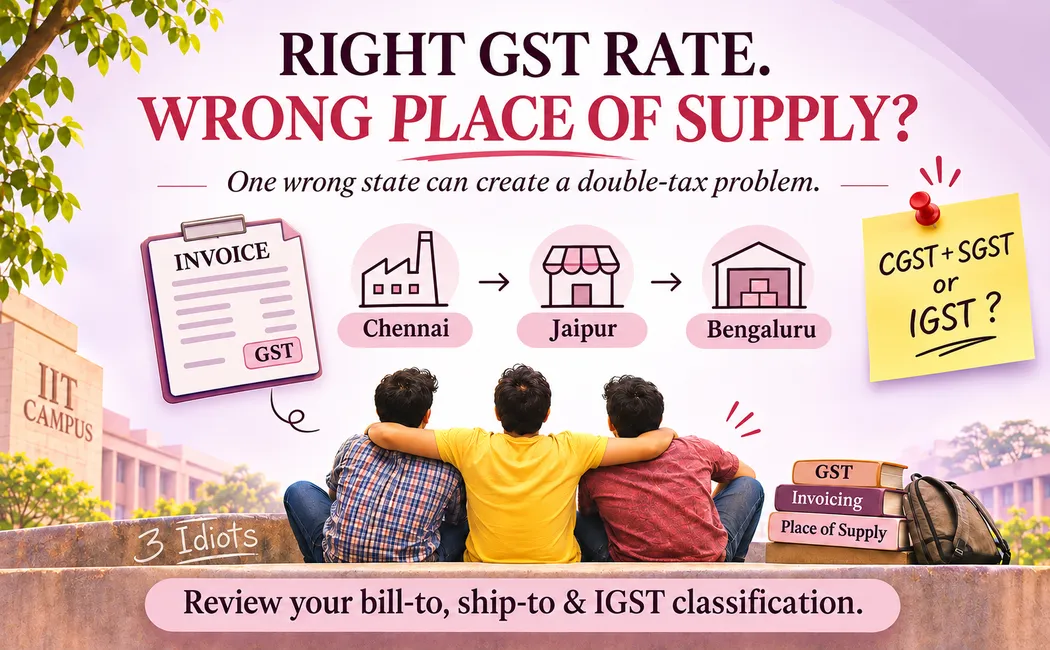
𝗚𝗦𝗧 𝗣𝗹𝗮𝗰𝗲 𝗼𝗳 𝗦𝘂𝗽𝗽𝗹𝘆: 𝗢𝗻𝗲 𝗪𝗿𝗼𝗻𝗴 𝗦𝘁𝗮𝘁𝗲, 𝗗𝗼𝘂𝗯𝗹𝗲 𝗧𝗮𝘅!
Rancho, Farhan and Raju discover that GST compliance is not just about charging the correct tax rate.
𝗜𝗱𝗲𝗻𝘁𝗶𝗳𝘆𝗶𝗻𝗴 𝘁𝗵𝗲 𝗰𝗼𝗿𝗿𝗲𝗰𝘁 𝗣𝗹𝗮𝗰𝗲 𝗼𝗳 𝗦𝘂𝗽𝗽𝗹𝘆 𝗶𝘀 𝗲𝗾𝘂𝗮𝗹𝗹𝘆 𝗶𝗺𝗽𝗼𝗿𝘁𝗮𝗻𝘁!
Rancho operates a manufacturing company in Chennai with an annual turnover of ₹75 crore.
Farhan, his customer in Jaipur, orders machinery worth ₹20 lakh.
The machinery is delivered directly to Raju's factory in Bengaluru.
𝗥𝗮𝗻𝗰𝗵𝗼 𝗮𝘀𝗸𝘀: “𝗦𝗵𝗼𝘂𝗹𝗱 𝗜 𝗰𝗵𝗮𝗿𝗴𝗲 𝗖𝗚𝗦𝗧 + 𝗦𝗚𝗦𝗧 𝗼𝗿 𝗜𝗚𝗦𝗧?”
Under 𝗦𝗲𝗰𝘁𝗶𝗼𝗻 𝟭𝟬(𝟭)(𝗯) 𝗼𝗳 𝘁𝗵𝗲 𝗜𝗚𝗦𝗧 𝗔𝗰𝘁, where goods are delivered to another person on the buyer's direction, the place of supply is generally the principal place of business of the buyer giving that direction.
𝗥𝗲𝘀𝘂𝗹𝘁:
Rajasthan is the Place of Supply.
Since Rancho's supplier location is Tamil Nadu, 𝗜𝗚𝗦𝗧 𝗮𝗽𝗽𝗹𝗶𝗲𝘀!
𝟯 𝗚𝗦𝗧 𝗦𝗶𝘁𝘂𝗮𝘁𝗶𝗼𝗻𝘀 𝗘𝘃𝗲𝗿𝘆 𝗘𝗻𝘁𝗿𝗲𝗽𝗿𝗲𝗻𝗲𝘂𝗿 𝗠𝘂𝘀𝘁 𝗨𝗻𝗱𝗲𝗿𝘀𝘁𝗮𝗻𝗱
𝟭. 𝗕𝘂𝘀𝗶𝗻𝗲𝘀𝘀-𝘁𝗼-𝗕𝘂𝘀𝗶𝗻𝗲𝘀𝘀 (𝗕𝟮𝗕) 𝗦𝗲𝗿𝘃𝗶𝗰𝗲𝘀
A Chennai consultancy provides services to a GST-registered company in Coimbatore. Generally, the customer's registered location determines the Place of Supply.
𝟮. 𝗕𝘂𝘀𝗶𝗻𝗲𝘀𝘀-𝘁𝗼-𝗖𝗼𝗻𝘀𝘂𝗺𝗲𝗿 (𝗕𝟮𝗖) 𝗦𝗲𝗿𝘃𝗶𝗰𝗲𝘀
A Chennai IT company provides general services to an unregistered customer in Kerala.
The customer's address on record generally determines the Place of Supply.
𝟯. 𝗚𝗼𝗼𝗱𝘀 𝗗𝗲𝗹𝗶𝘃𝗲𝗿𝗲𝗱 𝘁𝗼 𝗔𝗻𝗼𝘁𝗵𝗲𝗿 𝗦𝘁𝗮𝘁𝗲
For ordinary movement-based supplies, the Place of Supply is generally where the movement terminates for delivery, subject to special rules.
𝗪𝗵𝗮𝘁 𝗦𝗵𝗼𝘂𝗹𝗱 𝗕𝘂𝘀𝗶𝗻𝗲𝘀𝘀 𝗢𝘄𝗻𝗲𝗿𝘀 𝗥𝗲𝘃𝗶𝗲𝘄?
𝗩𝗲𝗿𝗶𝗳𝘆 𝗰𝘂𝘀𝘁𝗼𝗺𝗲𝗿 𝗚𝗦𝗧𝗜𝗡 𝗮𝗻𝗱 𝗯𝗶𝗹𝗹𝗶𝗻𝗴 𝗱𝗲𝘁𝗮𝗶𝗹𝘀.
𝗖𝗵𝗲𝗰𝗸 𝗯𝗶𝗹𝗹-𝘁𝗼 𝗮𝗻𝗱 𝘀𝗵𝗶𝗽-𝘁𝗼 𝘁𝗿𝗮𝗻𝘀𝗮𝗰𝘁𝗶𝗼𝗻𝘀.
𝗥𝗲𝘃𝗶𝗲𝘄 𝗜𝗚𝗦𝗧 𝘃𝗲𝗿𝘀𝘂𝘀 𝗖𝗚𝗦𝗧/𝗦𝗚𝗦𝗧 𝗰𝗹𝗮𝘀𝘀𝗶𝗳𝗶𝗰𝗮𝘁𝗶𝗼𝗻.
𝗧𝗿𝗮𝗶𝗻 𝗮𝗰𝗰𝗼𝘂𝗻𝘁𝘀 𝘁𝗲𝗮𝗺𝘀 𝘁𝗼 𝗶𝗱𝗲𝗻𝘁𝗶𝗳𝘆 𝗣𝗹𝗮𝗰𝗲 𝗼𝗳 𝗦𝘂𝗽𝗽𝗹𝘆 𝗰𝗼𝗿𝗿𝗲𝗰𝘁𝗹𝘆.
𝗪𝗿𝗼𝗻𝗴 𝗰𝗹𝗮𝘀𝘀𝗶𝗳𝗶𝗰𝗮𝘁𝗶𝗼𝗻 𝗰𝗮𝗻 𝗹𝗲𝗮𝗱 𝘁𝗼 𝘁𝗮𝘅 𝗱𝗲𝗺𝗮𝗻𝗱𝘀, 𝗶𝗻𝘁𝗲𝗿𝗲𝘀𝘁, 𝗿𝗲𝗳𝘂𝗻𝗱 𝗽𝗿𝗼𝗰𝗲𝗱𝘂𝗿𝗲𝘀 𝗮𝗻𝗱 𝘄𝗼𝗿𝗸𝗶𝗻𝗴-𝗰𝗮𝗽𝗶𝘁𝗮𝗹 𝗯𝗹𝗼𝗰𝗸𝗮𝗴𝗲.
𝗜𝘀 𝘆𝗼𝘂𝗿 𝗼𝗿𝗴𝗮𝗻𝗶𝘀𝗮𝘁𝗶𝗼𝗻 𝗰𝗼𝗿𝗿𝗲𝗰𝘁𝗹𝘆 𝗱𝗲𝘁𝗲𝗿𝗺𝗶𝗻𝗶𝗻𝗴 𝗣𝗹𝗮𝗰𝗲 𝗼𝗳 𝗦𝘂𝗽𝗽𝗹𝘆?
Review your GST invoicing process before a routine transaction becomes a costly compliance issue.
𝗖𝗔 𝗦𝗮𝗶𝗹𝗲𝘀𝗵 𝗕𝗵𝗮𝗻𝗱𝗮𝗿𝗶
#GSTCompliance #PlaceOfSupply #IGST #GSTIndia #BusinessOwners #TamilNaduBusiness #GSTAdvisory

 Call Now