

Blog Detail
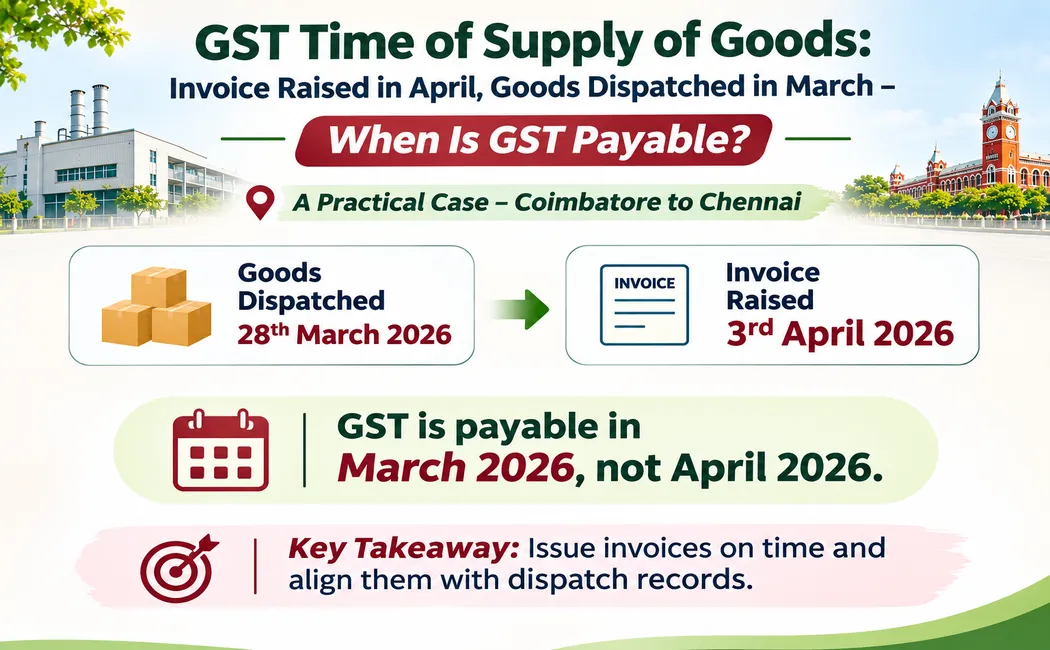
𝗚𝗦𝗧 𝗧𝗶𝗺𝗲 𝗼𝗳 𝗦𝘂𝗽𝗽𝗹𝘆 𝗼𝗳 𝗚𝗼𝗼𝗱𝘀:
𝗗𝗶𝘀𝗽𝗮𝘁𝗰𝗵𝗲𝗱 𝗚𝗼𝗼𝗱𝘀 𝗶𝗻 𝗠𝗮𝗿𝗰𝗵,
𝗯𝘂𝘁 𝗥𝗮𝗶𝘀𝗲𝗱 𝘁𝗵𝗲 𝗜𝗻𝘃𝗼𝗶𝗰𝗲 𝗶𝗻 𝗔𝗽𝗿𝗶𝗹!
𝗝𝗲𝘁𝗵𝗮𝗹𝗮𝗹 𝗚𝗮𝗱𝗮, owner of Gada Electronics, Chennai, with an annual turnover of ₹35 crore.
On 𝟮𝟴𝘁𝗵 𝗠𝗮𝗿𝗰𝗵 𝟮𝟬𝟮𝟲, Jethalal dispatched electronic goods worth ₹25 lakh to 𝗔𝘁𝗺𝗮𝗿𝗮𝗺 𝗕𝗵𝗶𝗱𝗲, a dealer in Coimbatore.
However, due to year-end accounting pressure, Jethalal's accountant, 𝗕𝗮𝗴𝗵𝗮, raised the invoice only on 𝟯𝗿𝗱 𝗔𝗽𝗿𝗶𝗹 𝟮𝟬𝟮𝟲.
Bagha reported the sale in April's GST return.
𝗪𝗮𝘀 𝗕𝗮𝗴𝗵𝗮 𝗰𝗼𝗿𝗿𝗲𝗰𝘁 𝗶𝗻 𝗿𝗲𝗽𝗼𝗿𝘁𝗶𝗻𝗴 𝘁𝗵𝗲 𝘀𝗮𝗹𝗲 𝗶𝗻 𝗔𝗽𝗿𝗶𝗹?
𝗡𝗼!
Under Sections 12 and 31 of the CGST Act, the time of supply of goods is generally the earlier of:
Date of issue of invoice.
Last date on which the invoice should legally have been issued.
Since the goods were dispatched on 28th March, GST liability arose in March itself.
𝗚𝗦𝗧 𝗶𝗻𝘃𝗼𝗹𝘃𝗲𝗱: ₹𝟰.𝟱𝟬 𝗹𝗮𝗸𝗵 (𝗮𝘀𝘀𝘂𝗺𝗶𝗻𝗴 𝟭𝟴%).
𝗪𝗵𝗮𝘁 𝗵𝗮𝗽𝗽𝗲𝗻𝘀 𝘄𝗵𝗲𝗻 𝗧𝗮𝗮𝗿𝗮𝗸 𝗠𝗲𝗵𝘁𝗮, 𝗝𝗲𝘁𝗵𝗮𝗹𝗮𝗹'𝘀 𝗮𝗱𝘃𝗶𝘀𝗼𝗿, 𝗿𝗲𝘃𝗶𝗲𝘄𝘀 𝘁𝗵𝗲 𝘁𝗿𝗮𝗻𝘀𝗮𝗰𝘁𝗶𝗼𝗻?
Taarak identifies that the dispatch date and invoice date belong to different financial years.
This could result in:
• Interest on delayed GST payment.
• GST reconciliation mismatches.
• Departmental scrutiny.
𝗪𝗵𝗮𝘁 𝗮𝗱𝘃𝗶𝗰𝗲 𝗱𝗼𝗲𝘀 𝗧𝗮𝗮𝗿𝗮𝗸 𝗴𝗶𝘃𝗲 𝗝𝗲𝘁𝗵𝗮𝗹𝗮𝗹?
Taarak recommends:
• Issue invoices before or at dispatch.
• Reconcile e-way bills with sales invoices.
• Review March dispatches before filing GST returns.
𝗧𝗵𝗲 𝗙𝗶𝗻𝗮𝗹 𝗤𝘂𝗲𝘀𝘁𝗶𝗼𝗻 𝗳𝗼𝗿 𝗘𝘃𝗲𝗿𝘆 𝗘𝗻𝘁𝗿𝗲𝗽𝗿𝗲𝗻𝗲𝘂𝗿
𝗜𝘀 𝘆𝗼𝘂𝗿 𝗯𝘂𝘀𝗶𝗻𝗲𝘀𝘀 𝗱𝗶𝘀𝗽𝗮𝘁𝗰𝗵𝗶𝗻𝗴 𝗴𝗼𝗼𝗱𝘀 𝗯𝗲𝗳𝗼𝗿𝗲 𝗿𝗮𝗶𝘀𝗶𝗻𝗴 𝗚𝗦𝗧 𝗶𝗻𝘃𝗼𝗶𝗰𝗲𝘀?
For businesses with turnover between ₹5 crore and ₹500 crore, timely invoicing is essential.
𝗥𝗲𝘃𝗶𝗲𝘄 𝘆𝗼𝘂𝗿 𝗚𝗦𝗧 𝗶𝗻𝘃𝗼𝗶𝗰𝗶𝗻𝗴 𝗽𝗿𝗼𝗰𝗲𝘀𝘀 𝘁𝗼𝗱𝗮𝘆 𝘁𝗼 𝗮𝘃𝗼𝗶𝗱 𝘂𝗻𝗻𝗲𝗰𝗲𝘀𝘀𝗮𝗿𝘆 𝗶𝗻𝘁𝗲𝗿𝗲𝘀𝘁 𝗮𝗻𝗱 𝗰𝗼𝗺𝗽𝗹𝗶𝗮𝗻𝗰𝗲 𝗶𝘀𝘀𝘂𝗲𝘀.
𝗖𝗔 𝗦𝗮𝗶𝗹𝗲𝘀𝗵 𝗕𝗵𝗮𝗻𝗱𝗮𝗿𝗶
#GST #GSTIndia #GSTCompliance #GSTUpdates2026 #GSTReturns #MSMEIndia #ChennaiBusiness

 Call Now