

Blog Detail
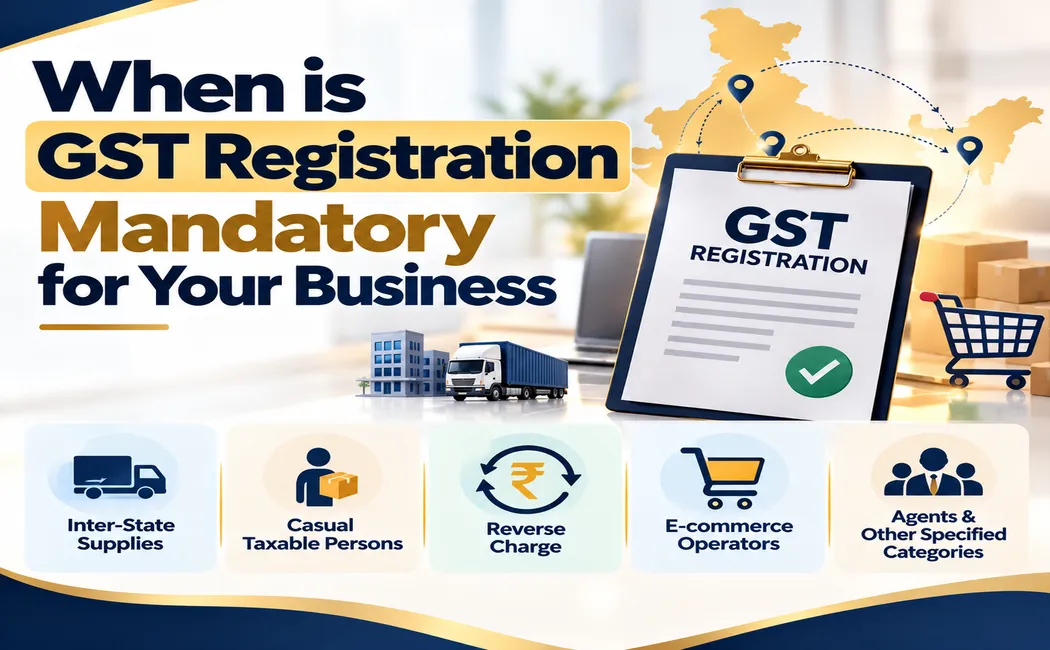
𝗚𝗦𝗧 𝗥𝗲𝗴𝗶𝘀𝘁𝗿𝗮𝘁𝗶𝗼𝗻: 𝗪𝗵𝗲𝗻 𝗧𝘂𝗿𝗻𝗼𝘃𝗲𝗿 𝗟𝗶𝗺𝗶𝘁𝘀 𝗗𝗼 𝗡𝗼𝘁 𝗔𝗽𝗽𝗹𝘆 ⠀
A growing business can face compulsory GST registration even when its turnover is below the usual threshold.
For entrepreneurs managing multiple activities, understanding Section 24 is essential.
⠀
𝗪𝗵𝗼 𝗠𝗮𝘆 𝗡𝗲𝗲𝗱 𝗖𝗼𝗺𝗽𝘂𝗹𝘀𝗼𝗿𝘆 𝗥𝗲𝗴𝗶𝘀𝘁𝗿𝗮𝘁𝗶𝗼𝗻?
⠀
The law identifies specific categories,
including persons making inter-State taxable supplies, casual taxable persons, persons liable to pay GST under reverse charge, non-resident taxable persons, and persons liable under 𝗦𝗲𝗰𝘁𝗶𝗼𝗻 𝟵(𝟱).
⠀
𝗢𝘁𝗵𝗲𝗿 𝗖𝗮𝘁𝗲𝗴𝗼𝗿𝗶𝗲𝘀 𝘁𝗼 𝗥𝗲𝘃𝗶𝗲𝘄
⠀
GST registration requirements also cover notified
TDS deductors, agents supplying on behalf of taxable persons, Input Service Distributors (ISDs), specified suppliers through e-commerce operators, e-commerce operators required to collect TCS, overseas providers of online information/database access services, overseas online money-gaming suppliers, and other notified persons.
⠀
𝗘𝘅𝗮𝗺𝗽𝗹𝗲
⠀
A Coimbatore trader selling goods to Karnataka should review inter-State registration rules.
A Chennai business operating through an e-commerce marketplace must examine whether the applicable exemption covers its supplies.
A manufacturer distributing common input-service credits among branches may need an ISD registration.
⠀
𝗜𝗺𝗽𝗼𝗿𝘁𝗮𝗻𝘁: 𝗘𝘅𝗲𝗺𝗽𝘁𝗶𝗼𝗻𝘀 𝗦𝘁𝗶𝗹𝗹 𝗠𝗮𝘁𝘁𝗲𝗿
⠀
Compulsory registration is not automatic in every case.
Notifications provide relief for certain inter-State service suppliers, eligible handicraft suppliers and specified e-commerce transactions.
Reverse-charge liability and the nature of the supply must also be checked against current provisions.
⠀
𝗔𝗰𝘁𝗶𝗼𝗻 𝗳𝗼𝗿 𝗕𝘂𝘀𝗶𝗻𝗲𝘀𝘀 𝗢𝘄𝗻𝗲𝗿𝘀
⠀
Review inter-State sales, marketplace transactions, agency arrangements, reverse-charge exposures and branch credit distribution.
Confirm the applicable exemptions before deciding whether additional GST registrations are required.
⠀
𝗖𝗔 𝗦𝗮𝗶𝗹𝗲𝘀𝗵 𝗕𝗵𝗮𝗻𝗱𝗮𝗿𝗶
⠀
#GST #GSTIndia #BusinessOwners #MSMEIndia #TaxCompliance #Entrepreneurs #InputTaxCredit #CGST

 Call Now