

Blog Detail
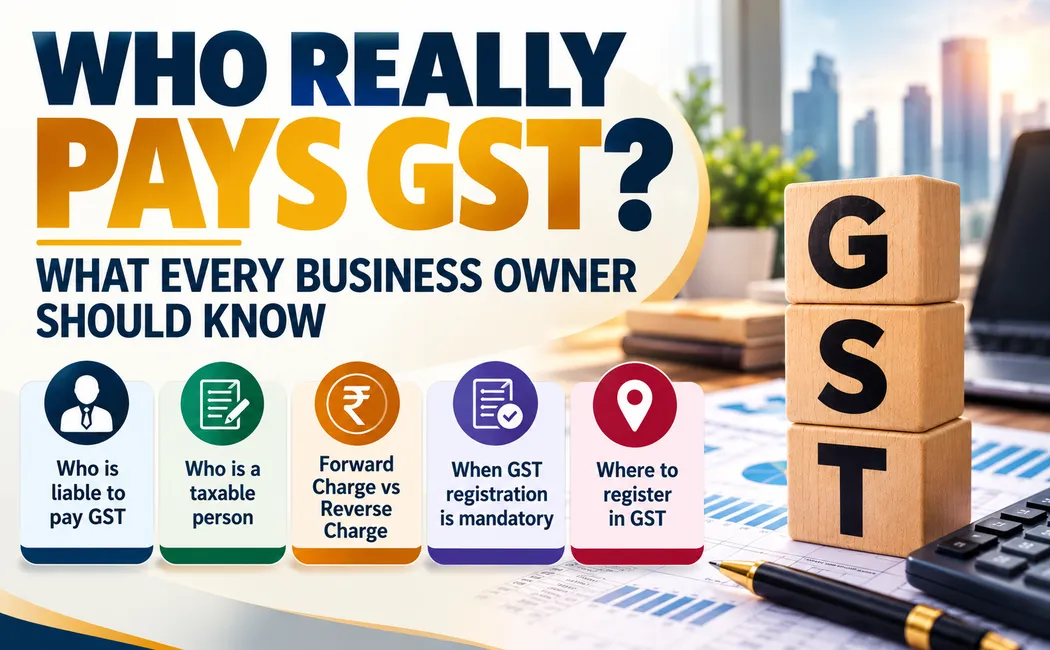
𝗪𝗛𝗢 𝗥𝗘𝗔𝗟𝗟𝗬 𝗣𝗔𝗬𝗦 𝗚𝗦𝗧? 𝗪𝗛𝗔𝗧 𝗘𝗩𝗘𝗥𝗬 𝗕𝗨𝗦𝗜𝗡𝗘𝗦𝗦 𝗢𝗪𝗡𝗘𝗥 𝗦𝗛𝗢𝗨𝗟𝗗 𝗞𝗡𝗢𝗪
As businesses grow, GST responsibility is not limited to filing returns. 𝗔 𝗯𝘂𝘀𝗶𝗻𝗲𝘀𝘀 𝗼𝘄𝗻𝗲𝗿 𝘀𝗵𝗼𝘂𝗹𝗱 𝗸𝗻𝗼𝘄 𝘄𝗵𝗼 𝗶𝘀 𝗹𝗶𝗮𝗯𝗹𝗲 𝘁𝗼 𝗽𝗮𝘆 𝗚𝗦𝗧, 𝘄𝗵𝗲𝗻 𝗿𝗲𝗴𝗶𝘀𝘁𝗿𝗮𝘁𝗶𝗼𝗻 𝗯𝗲𝗰𝗼𝗺𝗲𝘀 𝗰𝗼𝗺𝗽𝘂𝗹𝘀𝗼𝗿𝘆, 𝗮𝗻𝗱 𝗶𝗻 𝘄𝗵𝗶𝗰𝗵 𝗦𝘁𝗮𝘁𝗲 𝗿𝗲𝗴𝗶𝘀𝘁𝗿𝗮𝘁𝗶𝗼𝗻 𝗺𝗮𝘆 𝗯𝗲 𝗿𝗲𝗾𝘂𝗶𝗿𝗲𝗱.
𝗪𝗛𝗢 𝗜𝗦 𝗟𝗜𝗔𝗕𝗟𝗘 𝗧𝗢 𝗣𝗔𝗬 𝗚𝗦𝗧?
A person who is registered or liable to be registered under GST is generally treated as a taxable person.Registration liability can arise because:
• GST registration is mandatory under specific provisions, irrespective of turnover; or
• The applicable aggregate turnover threshold is crossed
𝗙𝗢𝗥𝗪𝗔𝗥𝗗 𝗖𝗛𝗔𝗥𝗚𝗘 𝗩𝗦 𝗥𝗘𝗩𝗘𝗥𝗦𝗘 𝗖𝗛𝗔𝗥𝗚𝗘
Normally, the supplier collects and pays GST. 𝗧𝗵𝗶𝘀 𝗶𝘀 𝗸𝗻𝗼𝘄𝗻 𝗮𝘀 𝗙𝗼𝗿𝘄𝗮𝗿𝗱 𝗖𝗵𝗮𝗿𝗴𝗲.
However, for specified transactions under Reverse Charge Mechanism (RCM), 𝘁𝗵𝗲 𝗿𝗲𝗰𝗶𝗽𝗶𝗲𝗻𝘁 𝗯𝗲𝗰𝗼𝗺𝗲𝘀 𝗹𝗶𝗮𝗯𝗹𝗲 𝘁𝗼 𝗽𝗮𝘆 𝗚𝗦𝗧.
𝗙𝗼𝗿 𝗲𝘅𝗮𝗺𝗽𝗹𝗲, a Chennai manufacturing company receiving a service covered under RCM may have to discharge GST itself instead of expecting the supplier to pay it.
𝗪𝗛𝗘𝗡 𝗗𝗢𝗘𝗦 𝗥𝗘𝗚𝗜𝗦𝗧𝗥𝗔𝗧𝗜𝗢𝗡 𝗕𝗘𝗖𝗢𝗠𝗘 𝗥𝗘𝗟𝗘𝗩𝗔𝗡𝗧?
A part from cases of mandatory registration, a business should review whether it is making taxable supplies and whether its aggregate turnover has crossed the applicable threshold.
The threshold can vary depending on the nature of supply and the State or Union Territory.
𝗪𝗛𝗘𝗥𝗘 𝗦𝗛𝗢𝗨𝗟𝗗 𝗧𝗛𝗘 𝗕𝗨𝗦𝗜𝗡𝗘𝗦𝗦 𝗥𝗘𝗚𝗜𝗦𝗧𝗘𝗥?
GST registration is State-specific.
A business generally needs to examine the State or Union Territory from which it makes taxable supplies.
𝗙𝗼𝗿 𝗲𝘅𝗮𝗺𝗽𝗹𝗲, a Tamil Nadu company executing operations from a fixed establishment in another State may need to separately review its registration requirement there.
𝗔𝗖𝗧𝗜𝗢𝗡 𝗣𝗢𝗜𝗡𝗧 𝗙𝗢𝗥 𝗕𝗨𝗦𝗜𝗡𝗘𝗦𝗦 𝗢𝗪𝗡𝗘𝗥𝗦
Do not review GST registration only when turnover increases.
𝗔 𝗽𝗲𝗿𝗶𝗼𝗱𝗶𝗰 𝗚𝗦𝗧 𝗿𝗲𝗴𝗶𝘀𝘁𝗿𝗮𝘁𝗶𝗼𝗻 𝗮𝗻𝗱 𝗹𝗶𝗮𝗯𝗶𝗹𝗶𝘁𝘆 𝗿𝗲𝘃𝗶𝗲𝘄 𝗰𝗮𝗻 𝗵𝗲𝗹𝗽 𝗲𝗻𝘀𝘂𝗿𝗲 𝘁𝗵𝗮𝘁 𝘁𝗵𝗲 𝗿𝗶𝗴𝗵𝘁 𝗲𝗻𝘁𝗶𝘁𝘆 𝗽𝗮𝘆𝘀 𝘁𝗵𝗲 𝗿𝗶𝗴𝗵𝘁 𝘁𝗮𝘅 𝗶𝗻 𝘁𝗵𝗲 𝗿𝗶𝗴𝗵𝘁 𝗦𝘁𝗮𝘁𝗲.
𝗖𝗔 𝗦𝗮𝗶𝗹𝗲𝘀𝗵 𝗕𝗵𝗮𝗻𝗱𝗮𝗿𝗶
#GST #GSTIndia #BusinessOwners #MSMEIndia #TaxCompliance #Entrepreneurs #CGST

 Call Now