

Blog Detail
GST Is More Than Just a Sale - What Business Owners Should Know
Most business owners think GST starts when a sale is made and an invoice is raised.
But under GST, the meaning of “supply” is much wider than a normal sale.
For businesses with turnover from ₹5 crore to ₹500 crore, understanding this becomes important as transactions grow in number and variety.
When Is a Transaction Connected to Business?
A transaction does not have to be your main business activity to come under GST. If an activity is connected with running or supporting your business, it may need to be examined under GST.
Business owners should therefore look beyond regular sales.
Receiving Services from Outside India?
Many businesses pay overseas companies for software, consultancy, technical support and other services.
Under GST, import of services for payment can be treated as a supply, even in certain cases where it is not connected with business.
Is It Goods or Is It Services?
Once a transaction is considered a supply, another important question arises:
Is it a supply of goods or a supply of services?
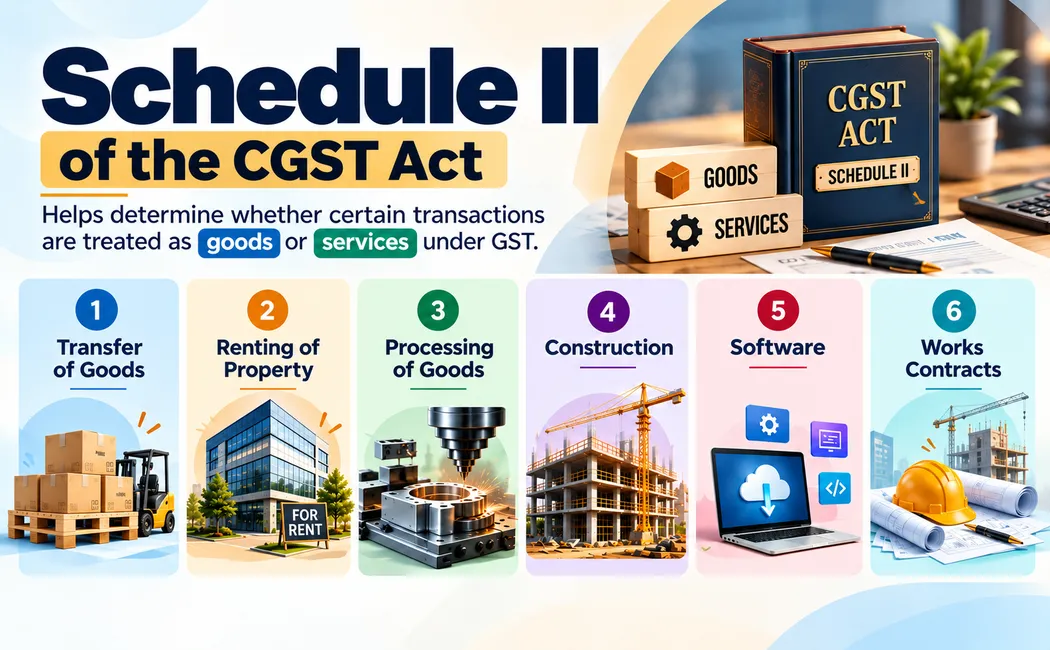
Schedule II Helps Answer This Question
It helps determine whether certain transactions are treated as goods or services under GST.
It covers activities such as transfer of goods, renting of property, processing of goods, construction, software and works contracts.
For example, a Chennai manufacturing company may sell machinery or simply give another business the right to use it.
Though both involve the same machinery, their GST treatment can be different.
Schedule II helps businesses understand this difference and apply the correct GST treatment.
One Question Every Business Should Ask
Before asking
“What GST rate applies?”, first ask:
“What exactly is the transaction – and
is it goods or services?”
CA SAILESH BHANDARI
#GST #GSTIndia #BusinessOwners #MSMEIndia #Taxation

 Call Now