

Blog Detail
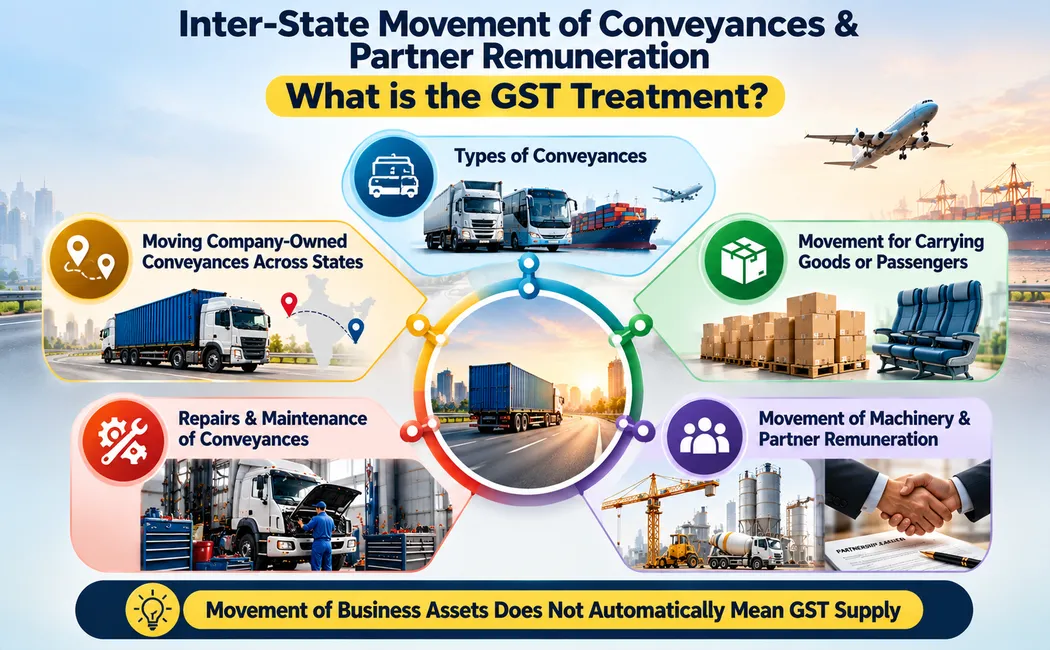
When Moving Business Assets Does Not Mean GST Supply
Growing businesses often move vehicles and machinery across States or pay remuneration to partners.
These routine transactions can raise an important question:
𝗗𝗼𝗲𝘀 𝗚𝗦𝗧 𝗮𝗽𝗽𝗹𝘆 𝗲𝘃𝗲𝗻 𝘄𝗵𝗲𝗻 𝘁𝗵𝗲𝗿𝗲 𝗶𝘀 𝗻𝗼 𝗻𝗼𝗿𝗺𝗮𝗹 𝘀𝗮𝗹𝗲?
For businesses with annual turnover of ₹5 crore to ₹500 crore, the answer depends on the nature and purpose of the transaction.
𝗜𝗻𝘁𝗲𝗿-𝗦𝘁𝗮𝘁𝗲 𝗠𝗼𝘃𝗲𝗺𝗲𝗻𝘁 𝗼𝗳 𝗩𝗲𝗵𝗶𝗰𝗹𝗲𝘀
Consider a Chennai logistics company with registrations in Tamil Nadu and Karnataka.
Its trucks may regularly move between the two States for carrying goods or passengers.
Although separate GST registrations are treated as distinct persons,
CBIC has clarified that inter-State movement of conveyances such as trucks, buses, tankers, trailers, vessels, containers and aircraft is not treated as a supply when the movement is for carrying goods or passengers, or for repairs and maintenance, and not for further supply of the conveyance itself.
Therefore, IGST is not payable merely on such movement.
𝗛𝗼𝘄𝗲𝘃𝗲𝗿, 𝗿𝗲𝗽𝗮𝗶𝗿 𝗮𝗻𝗱 𝗺𝗮𝗶𝗻𝘁𝗲𝗻𝗮𝗻𝗰𝗲 𝘀𝗲𝗿𝘃𝗶𝗰𝗲𝘀 𝗽𝗲𝗿𝗳𝗼𝗿𝗺𝗲𝗱 𝗼𝗻 𝘁𝗵𝗲𝘀𝗲 𝗰𝗼𝗻𝘃𝗲𝘆𝗮𝗻𝗰𝗲𝘀 𝗺𝗮𝘆 𝗮𝘁𝘁𝗿𝗮𝗰𝘁 𝗮𝗽𝗽𝗹𝗶𝗰𝗮𝗯𝗹𝗲 𝗚𝗦𝗧.
𝗠𝗼𝘃𝗲𝗺𝗲𝗻𝘁 𝗼𝗳 𝗠𝗮𝗰𝗵𝗶𝗻𝗲𝗿𝘆
The principle is also relevant for infrastructure and construction businesses.
𝗙𝗼𝗿 𝗲𝘅𝗮𝗺𝗽𝗹𝗲, a Coimbatore construction company may move a tower crane, batching plant or concrete pump to another project site.
Movement on its own account, where it does not involve distinct persons and is not intended for further supply of the machinery, does not constitute a supply.
𝗣𝗮𝗿𝘁𝗻𝗲𝗿 𝗥𝗲𝗺𝘂𝗻𝗲𝗿𝗮𝘁𝗶𝗼𝗻
Remuneration paid by a partnership firm to its partners is not treated as a supply under GST.
Businesses should still separately review any independent commercial services or arrangements with partners.
𝗔𝗰𝘁𝗶𝗼𝗻 𝗣𝗼𝗶𝗻𝘁
Review inter-State movement of vehicles and machinery, supporting documents, repair invoices and partner remuneration.
𝗖𝗼𝗿𝗿𝗲𝗰𝘁 𝗰𝗹𝗮𝘀𝘀𝗶𝗳𝗶𝗰𝗮𝘁𝗶𝗼𝗻 𝗮𝗻𝗱 𝗱𝗼𝗰𝘂𝗺𝗲𝗻𝘁𝗮𝘁𝗶𝗼𝗻 𝗰𝗮𝗻 𝗽𝗿𝗲𝘃𝗲𝗻𝘁 𝘂𝗻𝗻𝗲𝗰𝗲𝘀𝘀𝗮𝗿𝘆 𝗚𝗦𝗧 𝗲𝘅𝗽𝗼𝘀𝘂𝗿𝗲 𝗮𝘀 𝘆𝗼𝘂𝗿 𝗯𝘂𝘀𝗶𝗻𝗲𝘀𝘀 𝗲𝘅𝗽𝗮𝗻𝗱𝘀.
𝗖𝗔 𝗦𝗮𝗶𝗹𝗲𝘀𝗵 𝗕𝗵𝗮𝗻𝗱𝗮𝗿𝗶
#GST #GSTIndia #BusinessOwners #MSMEIndia #TaxCompliance #Entrepreneurs #CGST

 Call Now